

The Breville Barista Express Review
Why all the Hype?
The way we get our coffee has changed, and the home barista scene is booming at the moment with sales of domestic espresso machines and brewing gear skyrocketing!
And as I’m sure a lot of you have come to realise, while good for saving some of the old cashy-cash, home barista-ring aint easy, it takes patience and commitment, you WILL BURN your fingers!
And as is usually the case when learning any new creative skill, it’s often the quality, reliability, and the user-friendliness of your chosen equipment that dictates not just how quickly those skills develop, but also how much fun you have while they do!
Making and enjoying coffee should be an enjoyable process and needn't involve waste, mess, adjusting a thousand different settings and stressing over your espresso yield each morning, making you late each day…Life’s complicated enough!
Like the old saying goes - Happy baristas A DELICIOUS COFFEE DO MAKE!
So…
Could this little box of tricks guide you easily along the golden pathway of espresso-enlightenment?Or is it merely a messy mine-field of crappy-coffee-confusion!?
The Value Breakdown
Depending on where you live, the Barista Express clocks in around:
- $750 AUD
- £650 GBP
- $700 USD
That includes an integrated conical burr grinder — the same found in Breville’s Smart Grinder Pro — which is a big win for both your wallet and your bench space.
Bench-Top Friendly, Budget Friendly
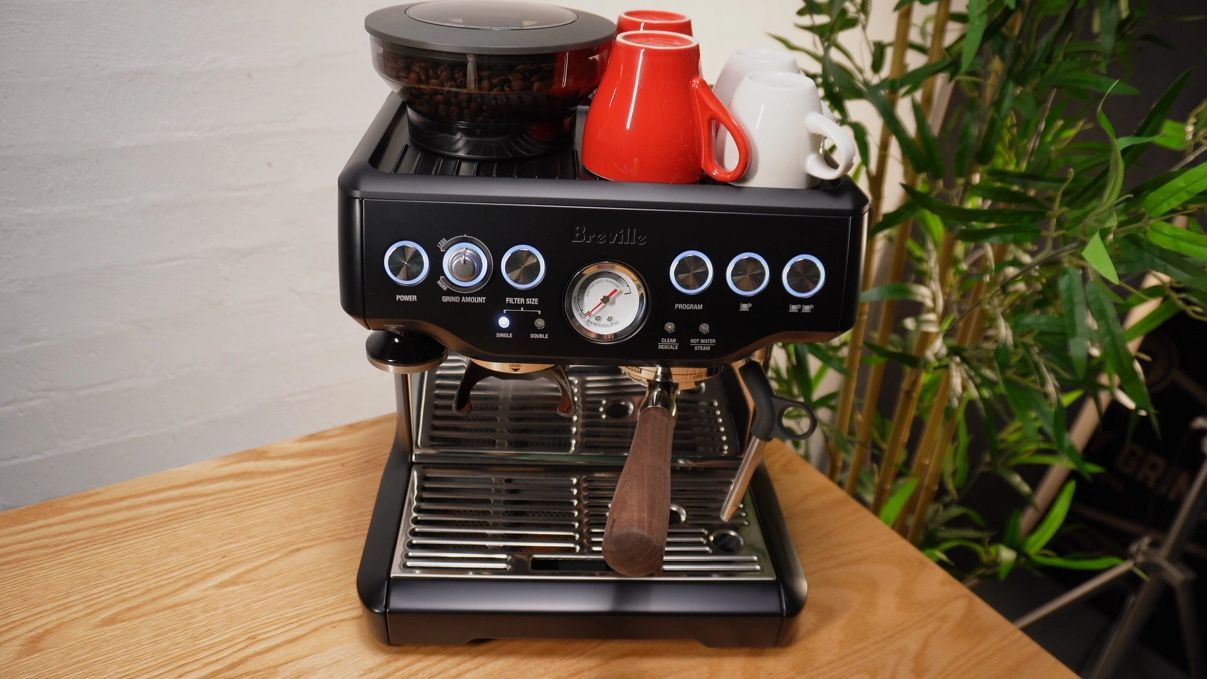
Compact footprint? Check.
One plug? Check.
Fits in most kitchens under cabinets? Yep.
And with sleek colour options like Black Truffle or Brushed Stainless Steel, it plays nice with your interior aesthetic, too.
Breville isn't sponsoring this, but credit where credit’s due: they’ve made espresso machines that are affordable, user-friendly, and inspired by commercial café gear, Case in point -
The Breville “4 Keys Formula”
Breville markets this machine around four core principles for great coffee:
1. 18–22g Dose / Precision Puck
This is the most common range of coffee doses used by professional baristas and came
about during the third wave specialty coffee revolution.
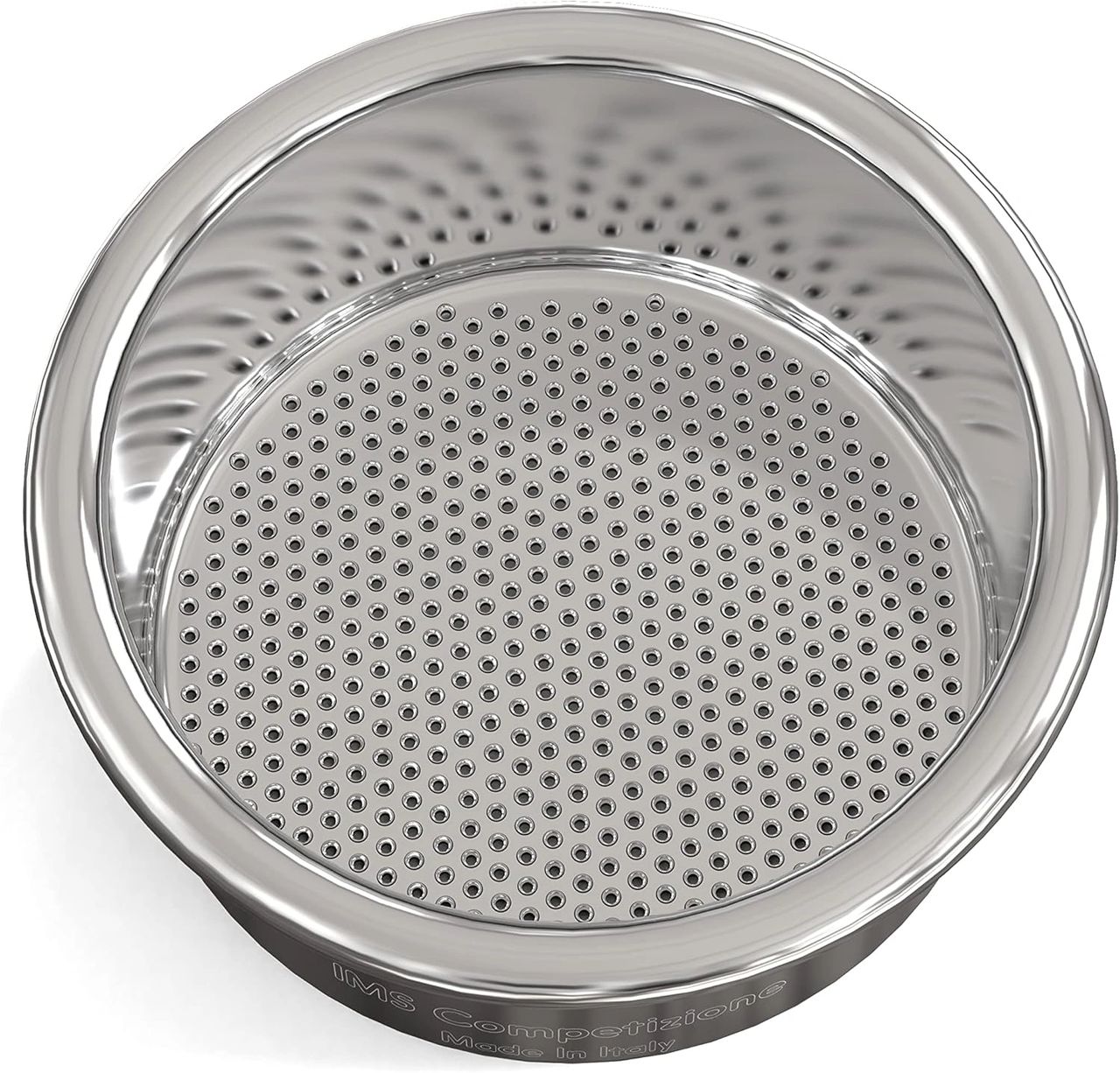
Breville includes a good choice of baskets with this machine and the jewel of the crown and by far the most commonly used (commercially and by 'pro-thusiasts' everywhere) the mighty 21 gram, single wall basket! Confusingly though, a 21g basket does not necessarily have to have 21 grams of coffee put into it, I work with cafes that use as much as 24g and some as little as 17g so you can go a bit under and a bit over.
Tip: Skip the pressurised baskets and buy fresh whole beans. You’ll thank yourself later.
2. 9-Bar Extraction Pressure
Like a commercial machine, the Express uses a low-pressure pre-infusion, then ramps up to a full 9-bar extraction, delivering a balanced and even shot.
3. 93°C Extraction Temperature + PID Control
Temperature matters. Breville uses a PID controller to stabilize the brew temp at 93°C, just like in a café, helping you avoid sour or bitter results.
4. 1 Million Microfoam Bubbles per mL
Okay, that stat’s more marketing than measurable. But truth is, this steam wand can produce silky milk once you get the hang of it.
Step-By-Step: Your First Coffee
✅ Step 1: Warm-Up
Let the machine heat up for at least 20 minutes before brewing. This might seem pedantic, but if all the metal components have had a chance to warm up it really will make a positive difference to the temperature stabilisation of your shot and the flavour of your coffee: Trust the process!
✅ Step 2: Dialing In
Ahh the fun begins.
"Dialling In' put simply is making a set of adjustments to the grinder to make sure that the correct amount of coffee is ground at the correct texture and for the correct amount of time. This will create the perfect level of resistance to ensure that when our hot water passes through the coffee puck, that it brings with it, into your cup, all of the delicious flavours and mouthfeel textures that the coffee roaster wants you to experience! Remember Key 2 and the Precision Puck?
Grind, weigh, adjust. Then taste. Learn to read your shot speed, crema texture, and extraction. It’s equal parts science and sensory observation!
✅ Step 3: Programming Your Shots
Now we have a decent looking shot running, we need to tell the machine how much of it we’re going to need. Letting the shot run too long will begin to dilute it and create more bitter notes, too short and the coffee’s flavour profiles will be under-developed.
Some common brew recipes to try are:
- The Double Ristretto - Meaning 'Restricted' in Italian, this is a shorter version of an Espresso, usually slightly sweeter and less acidic. Great for espressos, piccolos. The Double Ristretto uses a brew ratio of 1:1 coffee to water so a 21g dose of ground coffee goes in and produces a 21g sot of espresso in the cup.
- The double Espresso - The foundation shot of most cafe style drinks especially larger flat white, cappuccinos and lattes, it runs for longer and uses a brew ratio here of 1:2 coffee to water so 21g in and 42g out (this often varies between 36g - 45g depending on the roast style. Double espresso can be split into two cups making... you guessed it, two single espressos!
Milk Steaming Tips
The cost of saving so much space, and heating up fairly quickly, means that the Barista Express is a single boiler machine, so you can only steam after you brew. But for me this isn't an issue (pre-heating your coffee cup is a good hack to avoid the shot cooling too much while the milk comes uo to temperature).
- Sink the tip of the wand just under the surface of the milk and listen for that kissing sound as you texture
- Once the jug warms noticeably, Lift it to sink the wand deeper. This stops the texture stage of the process. You are now only adding heat to the heat the milk, without adding more foam.
- Once the base of the jug is just too hot to touch for a second or two, stop steaming. The ideal texture is matt/silky with the appearance of white paint and no visible bubbles (if there are a few, banging the jug on the counter willet rid of them).
With a bit of practice, you’ll be pouring rosettas in no time!
Hidden Features & Clever Touches
- Storage under drip tray for small coffee tools like brushes and extra baskets.
- A warning indicator built into the drip tray to indicate when it is full of waste water.
- There is an almost hidden hot water spout, next to the steam wand for all you long black or tea drinkers out there!
The Downsides?
Let’s keep it real — no machine is perfect.
❌ 1. Plastic Parts
Some external parts feel a bit flimsy — especially the grind amount dial and steam knob.
❌ 2. Non-Dual Boiler
You can't steam and brew at the same time. Not a dealbreaker, but something to be aware of.
❌ 3. Pressurised Baskets Are Misleading
They’re included for ease but don’t do justice to specialty coffee.
Final Thoughts
There really is a lot to like here and a reason that so many of these exact machines can be found in aesthetic Instagram and TikTok videos, sneakily sitting in the background of some of YouTubes best coffee channels, and why they have such great reviews. They have been designed thoughtfully by coffee minded people for home baristas, just like you to learn and enjoy the fine art of coffee making!
As your coffee making journey plays out, you’ll probably, eventually outgrow some aspects of this little machine — but you'll always have the memories of that little box of tricks that started it all!
☕️ Over to You!
Tried the Barista Express? Thinking of buying one? Let me know in the comments good experiences, bad ones, it would be great to get your thoughts.
And hey — if you want to learn how to steam perfect milk, check out my full milk tutorial using this very machine..